Trailers
 EN
EN
 EN
EN
 EN
EN
 Teaser
Description
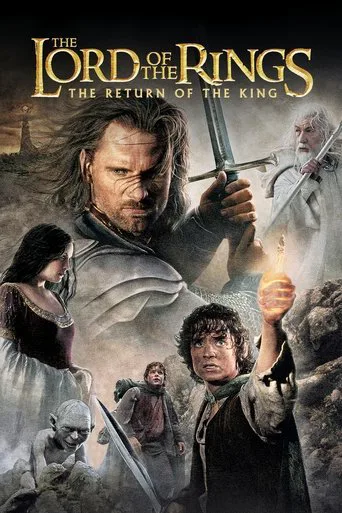
As armies mass for a final battle that will decide the fate of the world--and powerful, ancient forces of Light and Dark compete to determine the outcome--one member of the Fellowship of the Ring is revealed as the noble heir to the throne of the Kings of Men. Yet, the sole hope for triumph over evil lies with a brave hobbit, Frodo, who, accompanied by his loyal friend Sam and the hideous, wretched Gollum, ventures deep into the very dark heart of Mordor on his seemingly impossible quest to destroy the Ring of Power.
Starring
Awards
Key opinion
The Return of the King is widely regarded as a cinematic masterpiece and a definitive adaptation of Tolkien’s work, praised for its immense scale, technical achievement, and emotional resonance. While audiences largely celebrate its status as a monumental trilogy conclusion, some viewers express frustration regarding narrative deviations from the source material and the film's significant length.
| Production | The film functions as a monumental, cohesive conclusion that successfully integrates vast production design and striking landscapes into a unified trilogy. | |
| Score | Howard Shore’s musical score provides an excellent, immersive accompaniment that mirrors the epic events on screen. | |
| Acting | The casting is widely hailed as definitive, with performances from primary leads like Gandalf, Aragorn, and Legolas grounding the fantasy epic in authentic character work. | |
| Adaptation | Adaptation fidelity is polarized: many view Peter Jackson's narrative compression and changes as necessary for cinematic momentum, while purists argue that the exclusion of specific book elements and alterations to character dynamics betray the source material. | |
| Runtime | The lengthy runtime and multiple endings are received as both a necessary, satisfying emotional payoff for characters and an exhausting, sentimental excess that diminishes the film's final impact. |