Trailers
 EN
EN
 EN
EN
 EN
EN
Description
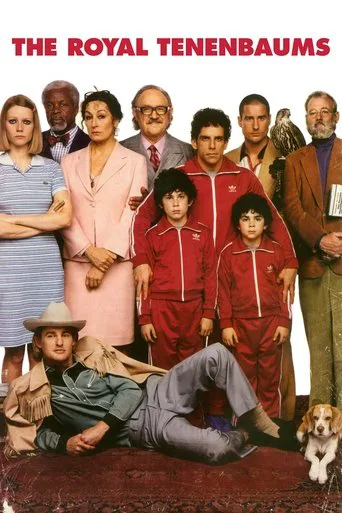
Royal Tenenbaum and his wife Etheline had three children and then they separated. All three children are extraordinary --- all geniuses. Virtually all memory of the brilliance of the young Tenenbaums was subsequently erased by two decades of betrayal, failure, and disaster. Most of this was generally considered to be their father's fault. "The Royal Tenenbaums" is the story of the family's sudden, unexpected reunion one recent winter.
Starring
Awards
Key opinion
Wes Anderson's 'The Royal Tenenbaums' is widely regarded as a visually distinctive and emotionally resonant character study that balances dry humor with profound familial melancholy. While some viewers find its quirky style and pacing inaccessible or derivative, most praise the meticulous production design and the nuanced, heartfelt performances of the ensemble cast.
| Cinematography | The film's visual identity—defined by meticulous symmetry, minimalist composition, and a vibrant, warm color palette—functions as an essential narrative tool that rewards repeated viewings. | |
| Acting | The ensemble cast delivers authentic and grounded performances that transform exaggerated, caricatured character archetypes into deeply sympathetic and human figures. | |
| Screenplay | The screenplay masterfully balances tragic themes of neglect and childhood trauma with ironic humor, creating a bittersweet tone that feels both sincere and sophisticated. | |
| Pacing | Opinions on the film's structure are divided: some appreciate the episodic, storybook-like pacing, while others find the chapter-based splits and specific narrative tempo to be jarring or disjointed. | |
| Originality | The film’s stylized, quirky aesthetic is polarizing; fans find it immersive and emotionally rich, whereas detractors perceive it as pretentious, hollow, or lacking a unique, organic voice. |