← Back to results
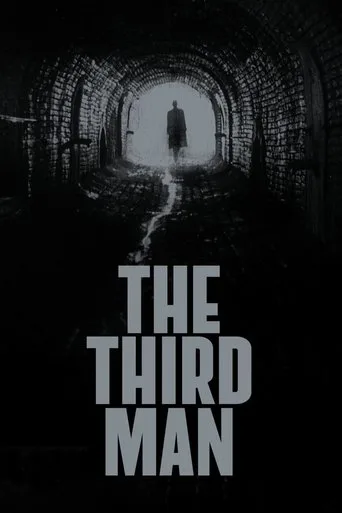
The Third Man
1949 105 min United Kingdom 12+
★8.8
Thriller, Mystery
Director: Carol Reed
Trailers

 EN
EN
 EN
EN
 EN
EN
 EN
EN
 EN
EN
 EN
EN
 EN
EN
 EN
EN
 EN
EN
 EN
EN
Description
In postwar Vienna, Austria, Holly Martins, a writer of pulp Westerns, arrives penniless as a guest of his childhood chum Harry Lime, only to learn he has died. Martins develops a conspiracy theory after learning of a "third man" present at the time of Harry's death, running into interference from British officer Major Calloway, and falling head-over-heels for Harry's grief-stricken lover, Anna.
US Gross:
$1.07M
Worldwide:
$1.23M
Starring
Orson Welles
Actor
Joseph Cotten
Actor
Alida Valli
Actor
Awards
Academy Awards 1951
— Best Cinematography (Black and White)
Cannes Film Festival 1949
— Grand Jury Prize
BAFTA 1950
— Best British Film
Academy Awards 1951
— Best Cinematography (Black and White)
Cannes Film Festival 1949
— Grand Jury Prize
BAFTA 1950
— Best British Film
Key opinion
The Third Man is widely regarded as a masterful noir thriller, praised for its atmospheric depiction of postwar Vienna and its innovative use of cinematography. While most viewers find the film’s moral complexity and performances timeless, a small minority views it as a dated piece of cinema that relies too heavily on its historical reputation.
| Cinematography | Robert Krasker’s expressionistic cinematography, characterized by its iconic canted angles and stark chiaroscuro lighting, serves as a visual cornerstone for the film's atmosphere. | |
| Acting | The performances are lauded as superlative, with Joseph Cotten providing a grounded, weary center and Orson Welles delivering an indelible, albeit brief, turn as the charismatic Harry Lime. | |
| Humor | The film effectively juxtaposes its heavy moral dilemmas and dark thriller plot with moments of dry, ironic humor. | |
| Score | Opinions on Anton Karas’s zither score are divided; some find its playful, folk-inspired tone a masterfully ironic counterpoint to the grim setting, while others find the repetitive nature of the instrument distracting and ill-suited to the mood. | |
| Pacing | While many celebrate the film as an enduring masterpiece of the genre, some viewers feel its stagecraft and pacing reflect an antiquated style that lacks immediate appeal for modern audiences. |