Trailers

 EN
EN
 EN
EN
 EN
EN
Description
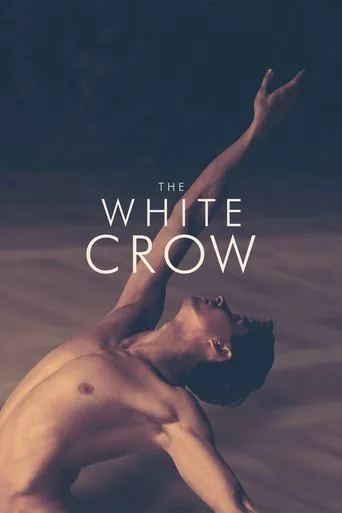
The story of Rudolf Nureyev, whose escape to the West stunned the world at the height of the Cold War. With his magnetic presence, Nureyev emerged as ballet’s most famous star, a wild and beautiful dancer limited by the world of 1950s Leningrad. His flirtation with Western artists and ideas led him into a high-stakes game of cat and mouse with the KGB.
Starring
Awards
Key opinion
The White Crow is generally regarded as a respectful, atmospheric, and visually meticulous biographical drama that succeeds in capturing the tension of Soviet-era life. While critics praise Ralph Fiennes' direction and the authentic depiction of historical settings, the film is divided by its fragmented non-linear narrative and whether the portrayal of Rudolf Nureyev feels deeply insightful or emotionally distant.
| Direction | Ralph Fiennes' direction provides a sophisticated, respectful, and atmospheric recreation of the Soviet period and artistic life in Paris. | |
| Production | The film excels in its visual recreation of the era, utilizing striking cinematography to contrast the muted tones of Leningrad with the vibrant colors of Western Europe. | |
| Acting | Oleg Ivenko's performance is a major point of contention: some viewers find his portrayal of Nureyev's temperament and physical presence convincing, while others feel he lacks the charisma and technical mastery of the real dancer. | |
| Pacing | The non-linear, fragmented timeline is seen by some as a thoughtful exploration of memory, while others find that it undermines narrative tension and slows the pacing. | |
| Screenplay | The screenplay effectively conveys the philosophical and political stakes of Nureyev's choice between Soviet constraints and artistic freedom. |