← Back to results
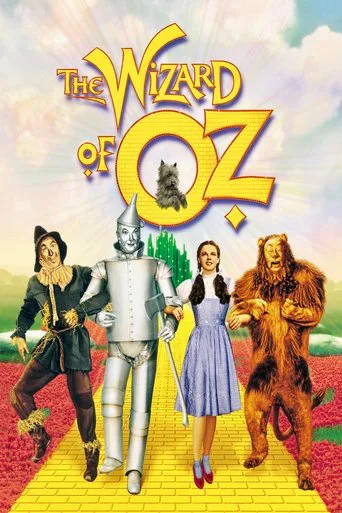
The Wizard of Oz
1939 102 min United States of America G 0+
★8.8
Adventure, Fantasy, Family
Director: Victor Fleming, George Cukor, Norman Taurog
🎭 Based on
«The Wonderful Wizard of Oz»
byL. Frank Baum
Trailers
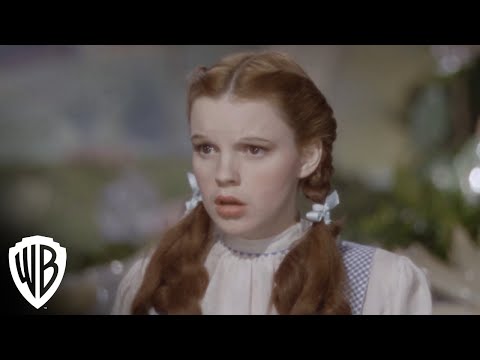
 EN
EN
 EN
EN
 Teaser
 Teaser
 Teaser
 Teaser
 Teaser
 Teaser
 Teaser
 Teaser
Description
Young Dorothy finds herself in a magical world where she makes friends with a lion, a scarecrow and a tin man as they make their way along the yellow brick road to talk with the Wizard and ask for the things they miss most in their lives. The Wicked Witch of the West is the only thing that could stop them.
Budget:
$2.78M
US Gross:
$24.67M
Worldwide:
$33.75M
Starring
Judy Garland
Actor
Frank Morgan
Actor
Ray Bolger
Actor
Awards
Academy Awards 1940
— Best Original Score
Saturn Awards 2006
— Best DVD Edition of a Classic Film
Academy Awards 1940
— Best Original Song
Academy Awards 1940
— Best Production Design
Saturn Awards 2006
— Best DVD Edition of a Classic Film
Academy Awards 1940
— Best Picture
Academy Awards 1940
— Best Cinematography (Color)
Academy Awards 1940
— Best Original Song
Key opinion
The Wizard of Oz is widely regarded as a timeless cinematic masterpiece and a foundational piece of American culture, celebrated for its pioneering use of Technicolor and iconic musical score. While some viewers find its theatrical staging and moral simplicity dated compared to modern alternatives, the majority praise its enduring emotional sincerity and exceptional ensemble performances.
| Acting | Judy Garland delivers an iconic, sincere, and emotionally resonant performance that grounds the fantasy world. | |
| Acting | Margaret Hamilton's portrayal of the Wicked Witch remains a standout, defined by her physical transformation and memorable presence. | |
| Production | The Technicolor cinematography and elaborate, handcrafted set designs create an immersive and legendary visual aesthetic. | |
| Score | The film's score and songs, particularly 'Over the Rainbow,' are universally recognized as essential, timeless contributions to film music. | |
| Screenplay | The screenplay is praised as a heartwarming, moralistic fairy tale, though some critics find its straightforward nature or 'naive' narrative less engaging than darker, more complex adaptations. | |
| Cinematography | The transition from black-and-white to color is a celebrated technical feat, though some viewers perceive the resulting aesthetic shift as jarring or indicative of the film's multiple directorial hands. |