← Back to results
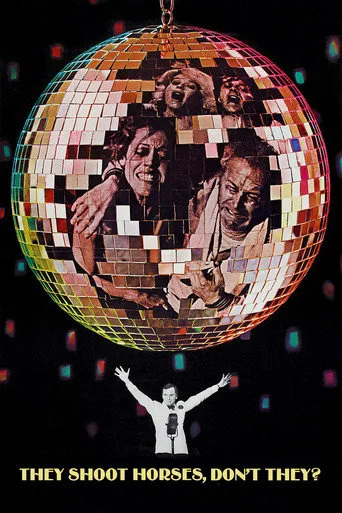
They Shoot Horses, Don't They?
1969 120 min United States of America PG 6+
★8.3
Drama
Director: Sydney Pollack
📖 Based on the novel
«They Shoot Horses, Don't They?»
byHorace McCoy
Trailers
Description
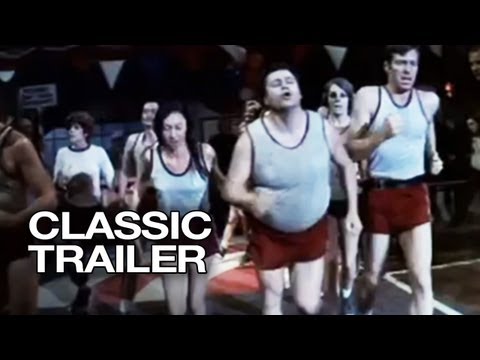
In the midst of the Great Depression, manipulative emcee Rocky enlists contestants for a dance marathon offering a $1,500 cash prize. Among them are a failed actress, a middle-aged sailor, a delusional blonde and a pregnant girl.
US Gross:
$12.6M
Starring
Jane Fonda
Actor
Michael Sarrazin
Actor
Susannah York
Actor
Awards
BAFTA 1971
— Best Supporting Actress
Academy Awards 1970
— Best Supporting Actor
Golden Globe 1970
— Best Actress (Drama)
Golden Globe 1970
— Best Director
Academy Awards 1970
— Best Actress
Academy Awards 1970
— Best Costume Design
Academy Awards 1970
— Best Film Editing
BAFTA 1971
— Best Supporting Actress
BAFTA 1971
— Best Supporting Actor
BAFTA 1971
— Best Film Editing
BAFTA 1971
— Most Promising Lead Debut
Academy Awards 1970
— Best Director
Academy Awards 1970
— Best Adapted Screenplay
Academy Awards 1970
— Best Production Design
Academy Awards 1970
— Best Score for a Musical Film
Golden Globe 1970
— Best Supporting Actor
Academy Awards 1970
— Best Supporting Actor
Academy Awards 1970
— Best Supporting Actress
Golden Globe 1970
— Best Picture (Drama)
BAFTA 1971
— Best Actress
Key opinion
Sydney Pollack's 'They Shoot Horses, Don't They?' is widely regarded as a haunting, visceral depiction of Great Depression-era despair and systemic exploitation. While most critics praise its claustrophobic atmosphere and powerful performances, some note that its unrelenting nihilism and specific stylistic choices may not resonate with every viewer.
| Acting | Jane Fonda anchors the film with a career-defining performance that captures the profound exhaustion and stoic resignation of the Depression era. | |
| Theme | The film masterfully employs the dance marathon as a stark metaphor for the human condition, portraying life as a grueling, inescapable cycle of struggle. | |
| Production | The claustrophobic, single-room setting effectively intensifies the tension and mirrors the characters' lack of options. | |
| Direction | Pollack’s direction is praised for its meticulous, unblinking depiction of human cruelty, though some viewers find the aesthetic approach to be overly theatrical or lacking in narrative flair. | |
| Ending | The ending is divisive, with some viewers finding it a powerful, logical conclusion to the film's bleak trajectory, while others feel it succumbs to excessive artifice or fails to provide a cohesive resolution. |