← Back to results
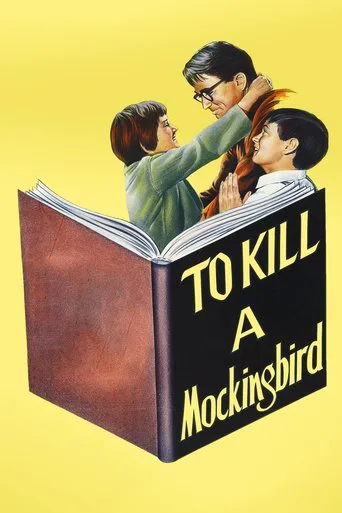
To Kill a Mockingbird
1962 129 min United States of America 18+
★8.8
Drama
Director: Robert Mulligan
🎭 Based on
«To Kill a Mockingbird»
byHarper Lee
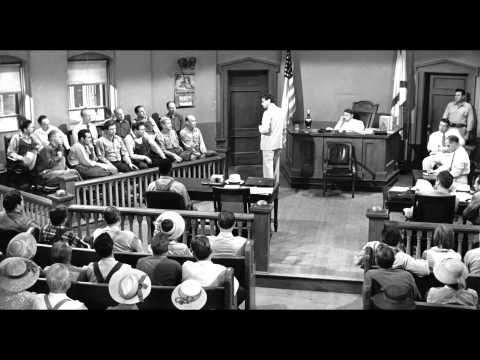
Trailers
 EN
EN
 Teaser
 Teaser
 Teaser
 EN
EN
 EN
EN
 EN
EN
 EN
EN
 EN
EN
 EN
EN
 EN
EN
 EN
EN
 EN
EN
 EN
EN
 EN
EN
 EN
EN
 EN
EN
 EN
EN
 EN
EN
 EN
EN
 EN
EN
Description
Scout Finch, 6, and her older brother Jem live in sleepy Maycomb, Alabama, spending much of their time with their friend Dill and spying on their reclusive and mysterious neighbor, Boo Radley. When Atticus, their widowed father and a respected lawyer, defends a black man named Tom Robinson against fabricated rape charges, the trial and tangent events expose the children to evils of racism and stereotyping.
Budget:
$2M
US Gross:
$592,237
Worldwide:
$13.13M
Starring
Gregory Peck
Actor
John Megna
Actor
Frank Overton
Actor
Awards
Academy Awards 1963
— Best Production Design (Black and White)
Academy Awards 1963
— Best Actor
Golden Globe 1963
— Best Original Score
Academy Awards 1963
— Best Production Design (Black and White)
Academy Awards 1963
— Best Supporting Actress
Academy Awards 1963
— Best Actor
Academy Awards 1963
— Best Cinematography (Black and White)
Academy Awards 1963
— Best Original Score
Academy Awards 1963
— Best Picture
Golden Globe 1963
— Best Director
Golden Globe 1963
— Best Picture (Drama)
Golden Globe 1963
— Best Original Score
Golden Globe 1963
— Best Film Promoting World Understanding
Academy Awards 1963
— Best Adapted Screenplay
Cannes Film Festival 1963
— Gary Cooper Prize
Golden Globe 1963
— Best Actor (Drama)
Cannes Film Festival 1963
— Palme d'Or
Key opinion
To Kill a Mockingbird is widely regarded as a classic adaptation that succeeds through a powerful moral core and a definitive performance by Gregory Peck. While most audiences and critics find its child-focused perspective and thematic depth timeless, some viewers criticize the film for its uneven pacing and narrative tangents.
| Acting | Gregory Peck's portrayal of Atticus Finch stands as an iconic, definitive performance that anchors the film's moral authority. | |
| Emotion | The film effectively captures the innocence and naivety of the children's perspective while navigating complex social themes. | |
| Direction | Robert Mulligan’s direction successfully translates the Southern small-town atmosphere and the weight of 1930s racial prejudice to the screen. | |
| Pacing | The narrative structure polarizes viewers; some appreciate the contemplative, character-driven focus on childhood, while others find the pacing uneven and filled with unnecessary subplots. | |
| Adaptation | Opinions on the adaptation's depth are divided between those who find it a powerful, relevant moral fable and those who feel it oversimplifies or omits the nuance of the source novel. |