← Back to results
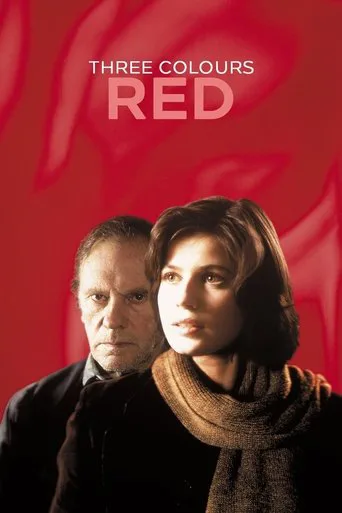
Three Colors: Red
Trois couleurs : Rouge
1994 100 min France, Poland, Switzerland R 16+
★8.8
Drama, Mystery, Romance
Director: Krzysztof Kieslowski
Trailers
 EN
EN
 EN
EN
 EN
EN
Description
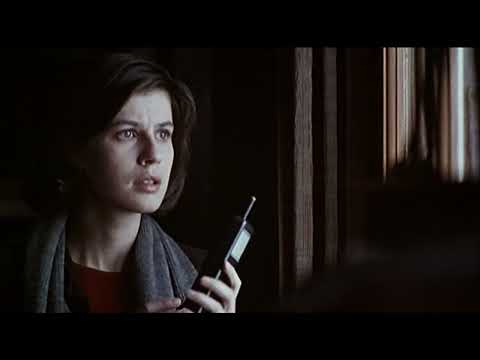
Part-time model Valentine unexpectedly befriends a retired judge after she runs over his dog. At first, the grumpy man shows no concern about the dog, and Valentine decides to keep it. But the two form a bond when she returns to his house and catches him listening to his neighbors’ phone calls.
US Gross:
$3.58M
Worldwide:
$4.13M
Starring
Irène Jacob
Actor
Jean-Louis Trintignant
Actor
Frédérique Feder
Actor
Awards
César Awards 1995
— Best Original Score
César Awards 1995
— Best Sound
César Awards 1995
— Best Screenplay
BAFTA 1995
— Best International Feature Film
BAFTA 1995
— Best Actress
César Awards 1995
— Best Actress
BAFTA 1995
— Best Adapted Screenplay
César Awards 1995
— Best Actor
Cannes Film Festival 1994
— Palme d'Or
BAFTA 1995
— David Lean Award for Direction
Academy Awards 1995
— Best Director
Academy Awards 1995
— Best Screenplay
Academy Awards 1995
— Best Cinematography
Golden Globe 1995
— Best International Feature Film
César Awards 1995
— Best Original Score
César Awards 1995
— Best Picture
Key opinion
Kieślowski’s final installment in the Three Colors trilogy is widely hailed as a masterpiece of symbolic cinema, praised for its profound exploration of human connection and moral ambiguity. While the film is celebrated for its visual artistry and thematic richness, viewers have differing reactions to its enigmatic conclusion and the specific pacing of its narrative structure.
| Acting | Irène Jacob and Jean-Louis Trintignant deliver profound, highly acclaimed performances that anchor the emotional core of the film. | |
| Cinematography | The cinematography effectively uses red color symbolism and precise imagery to unify the film's complex, intersecting lives. | |
| Screenplay | The screenplay successfully weaves intricate philosophical themes regarding brotherhood, fate, and privacy into a cohesive narrative puzzle. | |
| Pacing | The film's deliberate, contemplative tempo is experienced by some as a rewarding, rhythmic journey, while others perceive it as a slow, unconventional pace. | |
| Ending | The final scene is viewed by some as a perfect, poignant resolution to the trilogy, whereas others find the lack of explicit closure to be unsatisfying. |