← Back to results
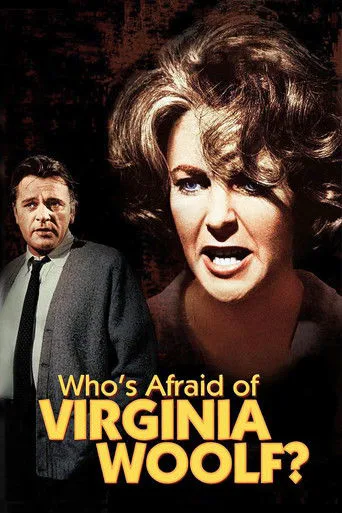
Who's Afraid of Virginia Woolf?
1966 131 min United States of America 16+
★8.6
Drama
Director: Mike Nichols
🎭 Based on
«Who's Afraid of Virginia Woolf?»
byEdward Albee
Trailers
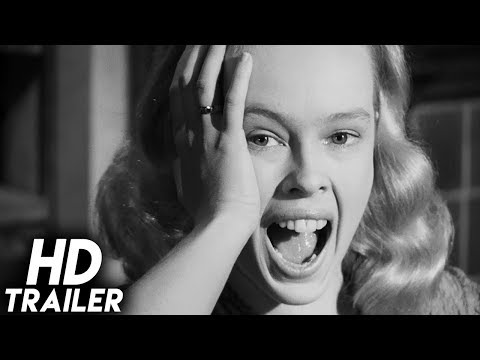
 EN
EN
 EN
EN
Description
A history professor and his wife entertain a young couple who are new to the university's faculty. As the drinks flow, secrets come to light, and the middle-aged couple unload onto their guests the full force of the bitterness, dysfunction, and animosity that defines their marriage.
Budget:
$7.5M
US Gross:
$28M
Worldwide:
$33.74M
Starring
Elizabeth Taylor
Actor
Richard Burton
Actor
George Segal
Actor
Awards
BAFTA 1967
— Best Picture
Academy Awards 1967
— Best Actress
Academy Awards 1967
— Best Supporting Actress
Academy Awards 1967
— Best Supporting Actor
Academy Awards 1967
— Best Adapted Screenplay
Golden Globe 1967
— Best Supporting Actress
Academy Awards 1967
— Best Supporting Actress
Academy Awards 1967
— Best Sound
Academy Awards 1967
— Best Cinematography (Black and White)
Academy Awards 1967
— Best Actor
Golden Globe 1967
— Best Actor (Drama)
BAFTA 1967
— Best British Actor
Academy Awards 1967
— Best Costume Design (Black and White)
Academy Awards 1967
— Best Production Design (Black and White)
Academy Awards 1967
— Best Picture
BAFTA 1967
— Best British Actress
Academy Awards 1967
— Best Original Score
Golden Globe 1967
— Best Picture (Drama)
Academy Awards 1967
— Best Film Editing
Academy Awards 1967
— Best Director
Golden Globe 1967
— Best Actress (Drama)
Golden Globe 1967
— Best Supporting Actor
Golden Globe 1967
— Best Screenplay
Key opinion
Who's Afraid of Virginia Woolf? is widely hailed as a landmark psychological drama defined by the visceral, powerhouse performances of Elizabeth Taylor and Richard Burton. While its raw depiction of marital dysfunction and its impact on social norms remain highly regarded, some viewers find the aggressive dialogue and static, stage-bound nature of the conflict to be exhausting or artificial.
| Acting | The lead performances by Elizabeth Taylor and Richard Burton are universally acclaimed as raw, intense, and career-defining turns that anchor the film's emotional stakes. | |
| Direction | Mike Nichols’ direction successfully translates a stage play into a cinematic experience by utilizing varied camera angles and tight focus to intensify the claustrophobic atmosphere. | |
| Culture | The film’s historical importance is cemented by its role in breaking the Hays Code, forcing a shift in Hollywood’s approach to adult themes and frank dialogue. | |
| Pacing | Opinions on the film's narrative structure are split: some find the relentless, cyclical nature of the couple’s verbal warfare a profound exploration of grief and power, while others perceive it as repetitive, dull, or lacking genuine psychological depth. |